Agriculture
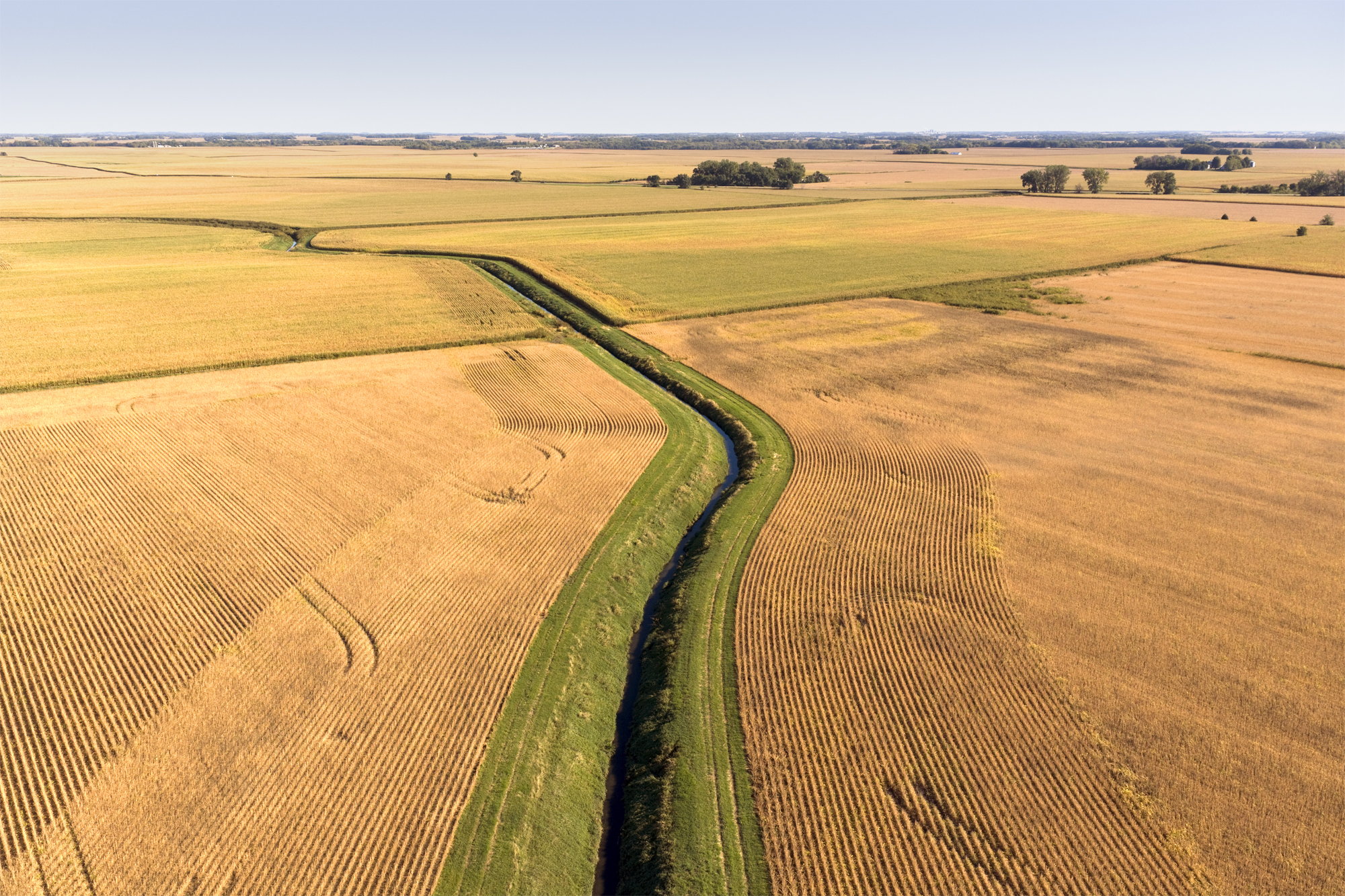
The artificial drainage of Minnesota’s agricultural land has increased over the past several decades, with profound costs to the quality of our lakes and streams, fish and aquatic species, recreation, and downstream infrastructure. Beginning around the mid-1970s, corn and soybeans, which require relatively dry soil conditions to thrive, became dominant crops among Minnesota growers.
Because Minnesota was naturally home to many wetlands, prairie potholes, and low-lying saturated areas, farmers needed to drain their fields to achieve dry soil conditions. As a result, many agricultural fields in Minnesota are now underlain by perforated plastic pipes (referred to as “drain tile”), which collect and deliver water to public and private ditches and ultimately to our lakes, rivers, and streams.
Agriculture in the news
| June 23, 2026 |
| Morris-based mega-dairy coming closer to reality with key regulatory ruling |
| A proposal to expand a Morris-based dairy operation from roughly 8,000 cows to nearly 19,000 moved closer to construction this week with a key regulatory ruling. The Minnesota Pollution Control Agency decided this week that Riverview Dairy does not need to complete an environmental review known as an Environmental Impact Statement to move forward with the expansion. |
| minnesotareformer.com |
| September 28, 2025 |
| New Report: Replumbing Minnesota's Landscape: How Agricultural Drainage Alters Rivers and Degrades Water Quality |
| www.mncenter.org |
| August 28, 2025 |
| Press Release: MN Groups Petition for State Action on Agricultural Drainage |
| www.mncenter.org |
| June 14, 2025 |
| ‘The river will not wait’ |
| MANKATO — Minnesota River improvement advocates said a system wide approach is needed to improve the Minnesota River watershed that is changing due to man-mad |
| www.nujournal.com |